


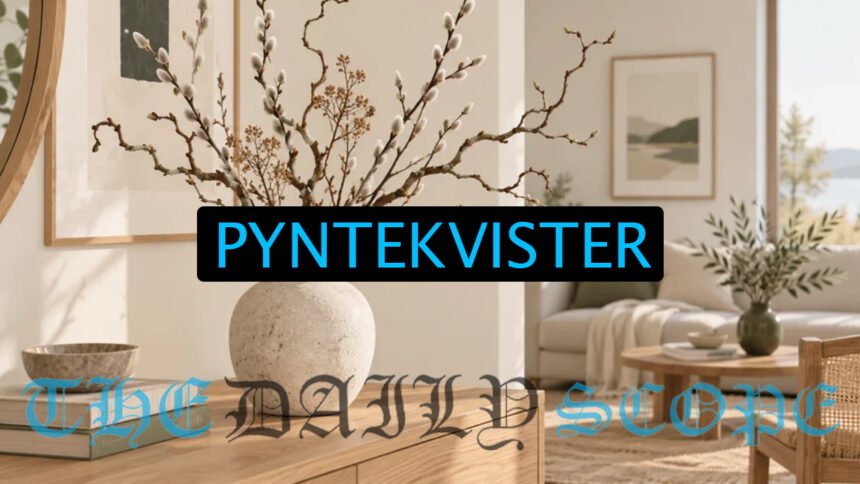
A few slender branches stand in a ceramic vase beside a window. Their natural curves catch the afternoon light, adding texture to an otherwise simple room. This understated decoration captures the idea behind Pyntekvister, a Norwegian term associated with decorative twigs and branches. Although the word may sound unfamiliar, it describes a simple approach to bringing natural materials into living spaces.
Instead of relying on elaborate ornaments or expensive floral arrangements, homeowners can use carefully selected branches to create attractive displays. Some branches remain bare, revealing their natural structure, while others carry delicate flowers, colorful stems, or seasonal leaves. Each arrangement offers a different appearance depending on the materials, container, and surrounding furniture.
Pyntekvister also connects with Scandinavian-inspired interior design, where natural textures and understated decoration often play important roles. However, its appeal extends beyond Nordic homes. From contemporary apartments to rustic living rooms, decorative branches can complement different styles. Understanding their meaning, origins, and practical uses helps explain how ordinary natural materials can become distinctive decorative features.
What Is Pyntekvister and What Does It Mean?
Pyntekvister refers to decorative twigs or branches used in home styling. Its meaning comes from Norwegian vocabulary. The verb pynte means to decorate or make something more attractive, while kvist means a small branch or twig. The plural form kvister refers to multiple twigs. These meanings are documented in Bokmålsordboka, a Norwegian dictionary maintained by the Language Council of Norway and the University of Bergen.
In practical terms, the word describes branches chosen for their visual appearance rather than their everyday function as wood. They may feature unusual curves, textured bark, colorful stems, or delicate buds. Unlike traditional flower bouquets, these arrangements often highlight the natural structure of the branches themselves. Pyntekvister does not identify one particular plant species, brand, or officially established design movement.
The Origins and Scandinavian Connection of Pyntekvister
The linguistic roots of Pyntekvister are Norwegian, but its exact historical development as a distinct decorating term is not publicly confirmed. No reliable historical record identifies a single inventor, founding organization, or specific year when the practice began. Decorating with natural branches belongs to a much broader tradition of using materials from nature to enhance indoor spaces.
Scandinavian-inspired interiors provide a fitting setting for this decorating approach. Nordic design commonly emphasizes natural wood, functional furniture, balanced proportions, and restrained accessories. Decorative branches complement these features because they introduce organic shapes without making a room feel crowded. A tall arrangement of willow stems, for example, can soften the straight lines of furniture while preserving a simple, uncluttered appearance.
Different Types of Pyntekvister for Home Decoration
Different branches create different visual effects, making material selection an important part of the decorating process. Willow branches are known for their slender forms and, in some varieties, soft catkins. Birch twigs offer delicate branching patterns, while certain dogwood varieties provide colorful stems. Bare branches work particularly well when the arrangement focuses on shape and texture rather than flowers or leaves.
Flowering branches offer another option, especially during spring. Forsythia, flowering cherry, quince, and magnolia can produce attractive indoor displays when collected and handled under suitable conditions. Some branches can even be encouraged to bloom indoors through a horticultural technique known as forcing. Dried branches provide longer-lasting decoration, while artificial stems offer a reusable alternative for spaces where maintaining fresh plants would be inconvenient.
How Pyntekvister Enhances Interior Design
Decorative branches can influence the appearance of a room without occupying much floor space. Their height draws attention upward, while smaller twigs introduce delicate lines and natural movement. Against a plain wall, even a single branch can become a noticeable feature. This approach works particularly well in rooms where homeowners prefer a few thoughtfully arranged objects rather than shelves filled with accessories.
Placement plays an equally important role. Tall branches can stand in floor vases near windows or furniture, while shorter stems suit dining tables, sideboards, and entryway consoles. A transparent glass vase emphasizes the branches, while a ceramic container provides a stronger visual base. Matching the size of the arrangement to the surrounding furniture helps create balance without overwhelming the space.
How to Make Pyntekvister at Home
Creating Pyntekvister at home begins with choosing suitable branches. Homeowners can use materials from permitted garden pruning, purchase decorative stems from a florist, or select artificial alternatives. Natural branches should be inspected for insects, decay, and damage before being brought indoors. Their length and thickness should also match the intended display area, as oversized branches can become difficult to arrange safely.
Next, trim the stems using suitable gardening tools and remove unwanted lower twigs. Fresh branches intended to produce flowers should generally be placed in clean water, while dried branches can remain in a water-free container. Arrange the stems at different heights, allowing enough space between them to reveal their individual shapes. A stable vase is essential, particularly when displaying heavier branches.
Choosing the Right Vase and Arrangement
The container affects both the appearance and stability of a decorative branch arrangement. Tall stems need a vase with sufficient weight and a broad enough base to prevent tipping. Smaller displays can fit narrow ceramic or glass containers on tables and shelves. Neutral-colored vessels often complement natural branches, although contrasting colors may also suit the surrounding interior.
Balance matters more than perfect symmetry. Branches naturally grow at different angles, and those irregular shapes can add character to an arrangement. However, stems should not block walkways, obstruct important sightlines, or lean dangerously toward furniture. Leaving space around the display also allows its natural structure to remain visible.
Seasonal Pyntekvister Decorating Ideas
Spring provides opportunities to display branches with emerging buds and colorful flowers. Forsythia can produce bright yellow blossoms, while flowering cherry and other suitable plants offer softer colors. According to Iowa State University Extension, certain spring-flowering branches can be encouraged to bloom indoors once their buds have developed sufficiently. The results depend on the plant species, collection date, and indoor conditions.
During summer, leafy branches can create fresh green arrangements. Autumn displays may feature warm-colored foliage or naturally dried stems, although cut leaves can deteriorate over time. Winter arrangements often emphasize bare branches and their distinctive shapes. Lightweight seasonal ornaments can also be added, provided they do not make the display unstable. These changes allow homeowners to reuse the same containers throughout the year.
Care and Maintenance of Decorative Branches
Fresh branches require different care from dried or artificial materials. Cut flowering stems generally need clean water and appropriate indoor conditions. University of New Hampshire Extension recommends regular water changes when forcing branches indoors and advises keeping arrangements away from direct sunlight. The exact requirements vary by plant species, so identifying the branches before preparing them is worthwhile.
Dried branches need no watering but may become brittle or collect dust. Artificial arrangements generally require occasional cleaning according to their materials. Safety is another important consideration. Some plants can be harmful to pets or children, so unfamiliar branches should be identified before entering the home. Dried materials should also remain away from candles, fireplaces, and other heat sources.
Sustainability and Responsible Sourcing
Using natural branches can provide an opportunity to reuse materials from routine garden maintenance. Suitable twigs left after permitted pruning may become attractive decorations instead of being discarded. However, natural decorations are not automatically environmentally friendly. Their impact depends on how the materials are collected, prepared, transported, and eventually disposed of.
Responsible sourcing begins with permission and careful plant management. Avoid removing branches from protected plants, restricted public spaces, or private property without authorization. Cutting healthy trees unnecessarily can cause damage, particularly when branches are removed incorrectly. Artificial materials present different environmental considerations, including manufacturing and disposal, although durable arrangements may be reused across multiple seasons.
Pyntekvister in Modern Homes Today
Pyntekvister appears in contemporary online home décor discussions as a term for decorative branches and twigs. Its applications include simple vase arrangements, seasonal displays, and natural accessories for living spaces. However, reliable statistics measuring its popularity, commercial market size, or growth as a decorating trend are not publicly confirmed.
The underlying approach remains flexible. Decorative branches can suit apartments, larger homes, reception areas, and event spaces, depending on their size and presentation. A small arrangement may introduce texture to a shelf, while a taller display can become a focal point in an entryway. The final appearance depends on thoughtful material selection, proportion, and placement rather than complicated decorating rules.
Conclusion
Pyntekvister describes decorative twigs and branches used to bring natural shapes and textures into indoor spaces. Its Norwegian linguistic roots explain the term’s meaning, while its connection with Scandinavian-inspired interiors reflects the value of simple, nature-based decoration. Although its precise history as a named practice remains unconfirmed, its practical applications are easy to understand.
From flowering spring arrangements to bare winter branches, Pyntekvister offers several ways to adapt natural materials to different interiors and seasons. Careful selection, responsible sourcing, and proper maintenance help create attractive, safe displays. Ultimately, the concept demonstrates how ordinary branches can become meaningful decorative elements without elaborate techniques or expensive accessories.
Frequently Asked Questions
1. What does Pyntekvister mean in English?
Pyntekvister means decorative twigs or branches. The interpretation comes from Norwegian vocabulary associated with decorating and small branches.
2. Is Pyntekvister a person or a decoration?
Pyntekvister is a decorating term, not a person. It describes branches or twigs arranged for visual appeal in homes and other interior spaces.
3. Where does Pyntekvister originate?
The term has Norwegian linguistic roots and is associated with Scandinavian-inspired home decoration. Its exact historical origin as a distinct decorating practice is not publicly confirmed.
4. Which branches are suitable for Pyntekvister?
Willow, birch, dogwood, forsythia, flowering cherry, and other suitable branches can be used. The choice depends on appearance, availability, plant safety, and maintenance requirements.
5. How long does a Pyntekvister arrangement last?
Its lifespan depends on the materials. Fresh flowering branches may remain attractive for days or weeks, while properly maintained dried or artificial branches can be displayed considerably longer.